Education
About wheel alignment
Wheel alignment is the process of adjusting the angles of your wheels so they are perpendicular to the road and parallel to each other — within the tolerances your vehicle manufacturer specifies.
Read the fundamentals: toe, caster & camber
Why angles matter
Toe describes whether tyres point slightly inward or outward. Camber is the tilt of the wheel from vertical. Caster influences steering feel and self-centring. Together they affect tyre wear, straight-line stability, and cornering balance.
How garages measure alignment
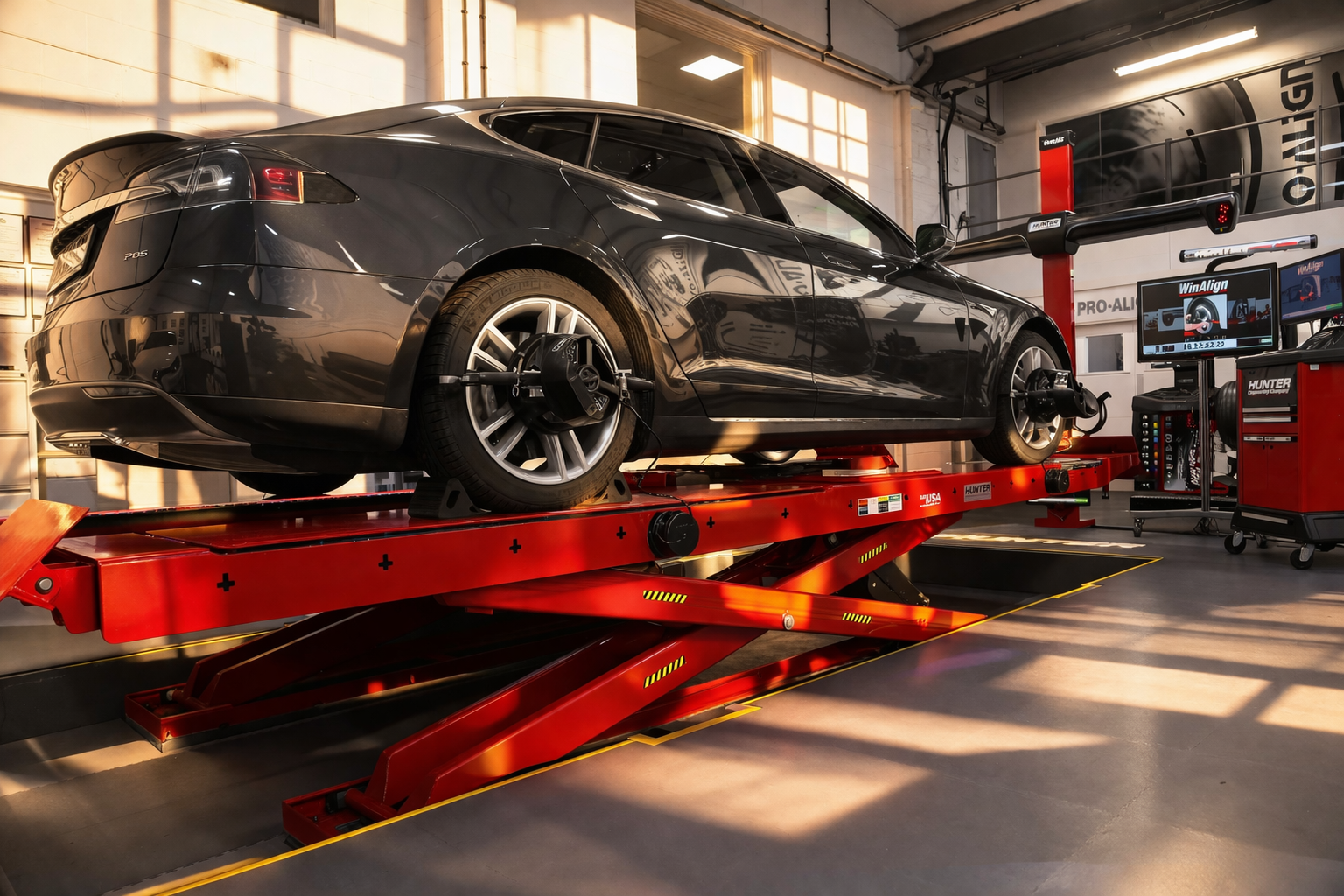
Modern workshops use laser lines or camera rigs that clamp to each wheel. The car is compared against a digital database of factory targets. Adjustments are made on tie rods, control arms, and sometimes subframes until readings fall in the green.
Two-wheel vs four-wheel
Front-only tracking can help in some older vehicles, but most contemporary cars — especially those with independent rear suspension — need a full four-wheel alignment to avoid leaving rear angles uncorrected.